
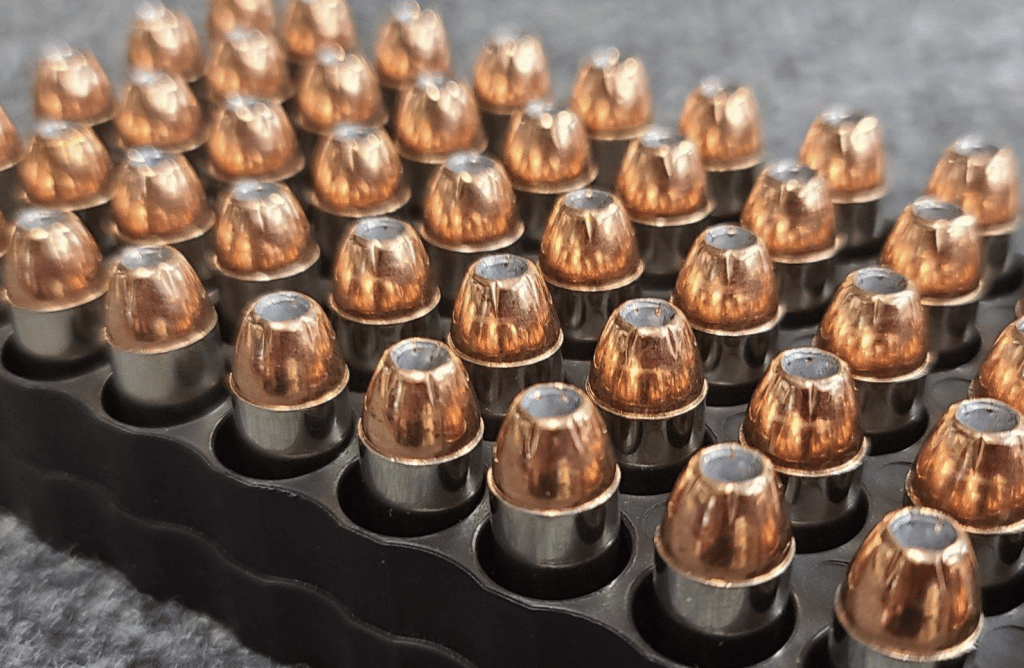
Everything You Need to Know About .40 S&W Ammunition
For decades, .40 cal ammo has been a popular centerfire handgun cartridge among American shooters. Better known as .40 S&W, the cartridge was developed to offer a balance between the capacity and manageable dimensions of 9mm platforms and the larger projectile diameter associated with .45 ACP.
Although 9mm dominates much of today’s handgun market, .40 S&W remains widely used. There are countless pistols chambered in the caliber, and ammunition manufacturers continue to produce .40 cal loads for range use, training, competition, and other applications.
Whether you already own a .40-caliber handgun or are learning more about the cartridge, understanding bullet weights, ammunition types, and terminology can help you determine what .40 S&W ammunition is appropriate for your firearm.
Our team at Ammo By Pistol Pete is breaking it down.
What Is .40 Cal Ammo?
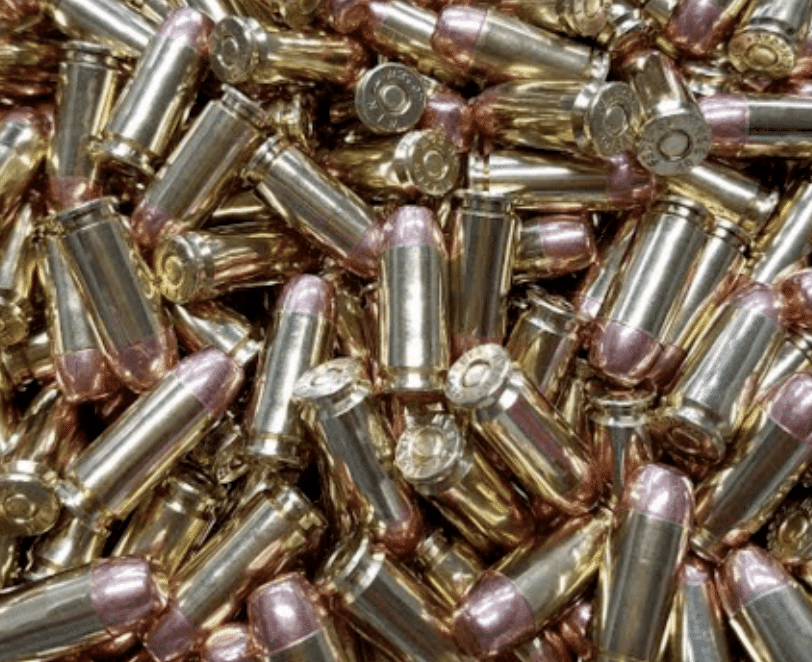
When shooters talk about .40 cal ammo, they are typically referring to the .40 Smith & Wesson (.40 S&W) cartridge.
Smith & Wesson and Winchester introduced the .40 S&W cartridge in 1990. It was developed following interest in a cartridge that could provide performance characteristics between popular 9mm and .45 ACP handgun cartridges while fitting into relatively compact semi-automatic pistols.
The cartridge uses a bullet measuring approximately 0.40 inches in diameter and is available in several bullet weights and configurations.
Over the following decades, .40 S&W became particularly prominent in the American handgun market, with numerous manufacturers offering pistols chambered for the cartridge.
Is .40 Cal the Same as .40 S&W?
In most modern handgun-ammunition conversations, “.40 cal” refers to .40 S&W.
However, caliber terminology can sometimes be confusing. Other cartridges use bullets of similar diameter, so shooters should always check the exact caliber designation marked on their firearm and ammunition.
If your handgun is chambered specifically for .40 S&W, use ammunition designated by the firearm manufacturer as compatible with that firearm.
Never assume ammunition is interchangeable simply because two cartridges have similar bullet diameters.
Common .40 S&W Bullet Weights
One factor you’ll encounter when shopping for .40 S&W ammo is bullet weight. Bullet weight is normally measured in grains, abbreviated as “gr.”
Several weights are available, but two of the most recognizable are:
- 165-grain .40 S&W
- 180-grain .40 S&W
Other bullet weights are available depending on the manufacturer and ammunition line.
Bullet weight can influence characteristics such as velocity, recoil impulse, and how the ammunition feels when fired from a particular handgun.
165-Grain .40 S&W Ammo
165-grain ammunition represents a relatively common option within the caliber.
Compared with heavier loads, lighter bullets are often driven at higher velocities, although exact performance varies substantially between manufacturers, loadings, barrel lengths, and firearms.
180-Grain .40 S&W Ammo
The 180-grain bullet is another extremely common choice for .40 S&W.
Because of its popularity, shooters can find 180-grain ammunition in numerous configurations from different manufacturers.
Neither bullet weight is automatically the “best” choice. Shooters should consider their firearm, intended application, manufacturer recommendations, and individual preferences.
FMJ vs. JHP .40 Cal Ammo
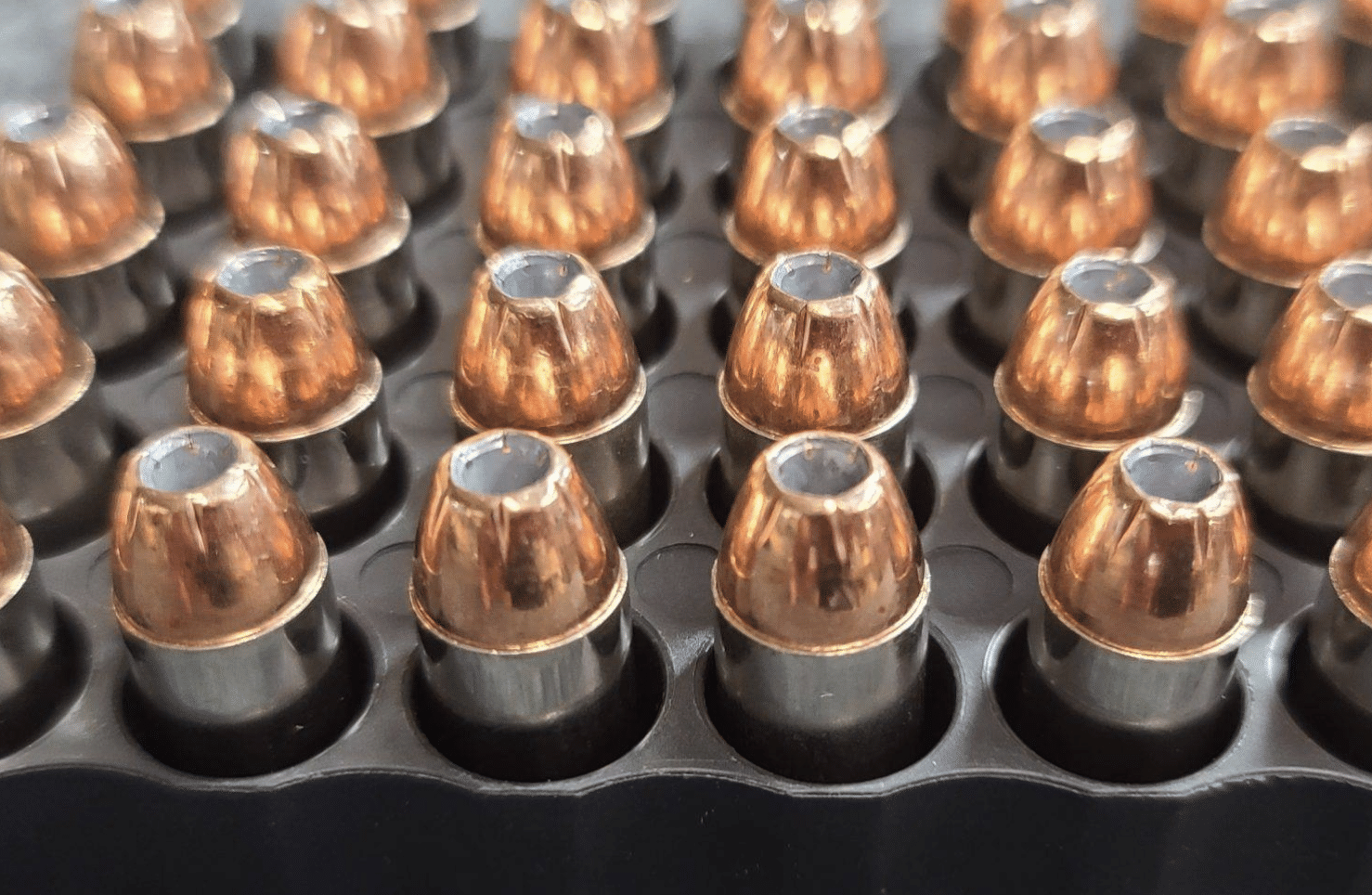
Two common bullet configurations you’ll encounter when shopping for .40 cal ammunition are full metal jacket (FMJ) and jacketed hollow point (JHP).
.40 S&W FMJ Ammo
FMJ ammunition typically features a lead core enclosed partially or substantially by a harder metal jacket.
It is commonly associated with:
- Recreational target shooting
- Range sessions
- Training
- Practice
For shooters who regularly practice with a .40 S&W handgun, FMJ ammunition is one of the most common options to encounter.
Need ammunition for your next range session? Check out the .40 S&W ammunition available from Ammo by Pistol Pete and stock up before your next trip.
.40 S&W JHP Ammo
JHP stands for jacketed hollow point. These projectiles incorporate a cavity in the bullet’s nose and are designed differently from traditional FMJ projectiles.
JHP ammunition is commonly marketed for defensive applications, such as concealed carry.
Performance varies considerably between individual loads, however, so buyers should pay attention to the specifications provided by the ammunition manufacturer rather than assuming every hollow-point cartridge performs identically.
.40 S&W vs. 9mm
One of the most common comparisons involving .40 cal is .40 S&W vs. 9mm.
The cartridges differ in projectile diameter, typical bullet weights, case dimensions, capacity considerations, recoil characteristics, and other factors.
9mm ammunition generally uses lighter and smaller-diameter projectiles. Depending on the firearm, this can allow manufacturers to design magazines with greater capacity compared with similar-size firearms chambered in .40 S&W.
.40 S&W, meanwhile, uses a larger-diameter projectile and commonly uses heavier bullets.
The best choice ultimately depends on the firearm, intended application, ammunition availability, shooting preferences, and other individual considerations.
.40 S&W vs. .45 ACP
Another frequent comparison is .40 S&W vs. .45 ACP.
Both cartridges typically use heavier projectiles than 9mm, but they are distinctly different cartridges.
.45 ACP uses a larger-diameter projectile, while .40 S&W generally allows manufacturers to offer handguns and magazines that fall between comparable 9mm and .45 ACP configurations in several respects.
Shooters should not consider the cartridges interchangeable. A firearm should only be used with ammunition specifically compatible with its chambering and manufacturer specifications.
Is .40 S&W Still Popular?
Yes. While the handgun market has increasingly favored 9mm, .40 S&W ammunition is still widely available and used.
Millions of .40 S&W firearms have been produced over the cartridge’s lifespan. Popular handgun manufacturers have offered .40-caliber models, creating a substantial installed base of firearms chambered for the cartridge.
That means demand for .40 S&W ammunition hasn’t simply disappeared.
For existing .40-caliber handgun owners, the cartridge remains a practical option for range shooting, training, competition, and other lawful shooting activities.
What Firearms Use .40 S&W Ammo?
Over the years, many major firearm manufacturers have produced handguns chambered in .40 S&W.
Models have included variants within popular handgun families from manufacturers such as Glock, Smith & Wesson, SIG Sauer, Heckler & Koch, Springfield Armory, and others.
Because individual firearm models and generations can be offered in several chamberings, always verify the caliber marked on your specific firearm before purchasing ammunition.
Never select ammunition solely because it looks similar to another cartridge.
What Should You Look for When Buying .40 Cal Ammo?
Before buying .40 S&W ammunition, consider several basic factors.
Correct Caliber
Start with the most important consideration: compatibility.
Check your firearm’s markings and owner’s manual to verify that it is chambered for the exact ammunition you are purchasing.
Bullet Weight
Determine whether you want a common weight such as 165-grain or 180-grain .40 S&W or another loading recommended for your intended application.
Different ammunition can produce noticeably different shooting characteristics.
Bullet Type
Consider whether you’re shopping for FMJ, JHP, or another projectile configuration.
For routine target shooting and practice, FMJ ammunition is commonly selected because of its straightforward design and widespread availability.
Manufacturer
Purchase ammunition from established manufacturers and reputable retailers. Ammunition specifications, bullet construction, velocities, and other characteristics vary between brands and individual product lines.
Quantity
Frequent range shooters may prefer purchasing ammunition in larger quantities rather than buying individual boxes immediately before each range session.
When comparing ammunition prices, looking at the cost per round can make comparing different box quantities easier.
How Should .40 Cal Ammo Be Stored?
Proper ammunition storage can help protect cartridges from environmental conditions that could cause deterioration.
Keep ammunition in a cool, dry environment and protect it from excessive moisture, heat, and significant temperature fluctuations.
Many shooters keep ammunition in its original packaging so the manufacturer, caliber, bullet weight, lot information, and other specifications remain easy to identify.
Always store firearms and ammunition securely and follow applicable laws and safe-storage practices.
Does .40 S&W Ammo Expire?
Modern ammunition doesn’t have a simple expiration date comparable to food.
When manufactured properly and stored under appropriate conditions, ammunition can remain functional for a long time. Moisture, corrosion, extreme temperatures, contamination, and poor storage conditions can negatively affect ammunition.
Inspect ammunition before use and follow manufacturer guidance. Cartridges showing significant corrosion, damage, deformation, or other abnormalities should not be treated like normal ammunition.
Why Shooters Still Choose .40 Cal
The rise of 9mm doesn’t mean .40 S&W has become obsolete.
There remains a large number of .40-caliber firearms in circulation, and ammunition continues to be manufactured in multiple bullet weights and configurations.
Shooters may choose .40 S&W because they already own a firearm chambered for it, prefer how a particular .40-caliber handgun handles, or simply enjoy shooting the cartridge.
Ultimately, caliber choice comes down to the firearm, intended application, individual preferences, and ammunition availability.
Shop .40 Cal Ammo at Ammo by Pistol Pete
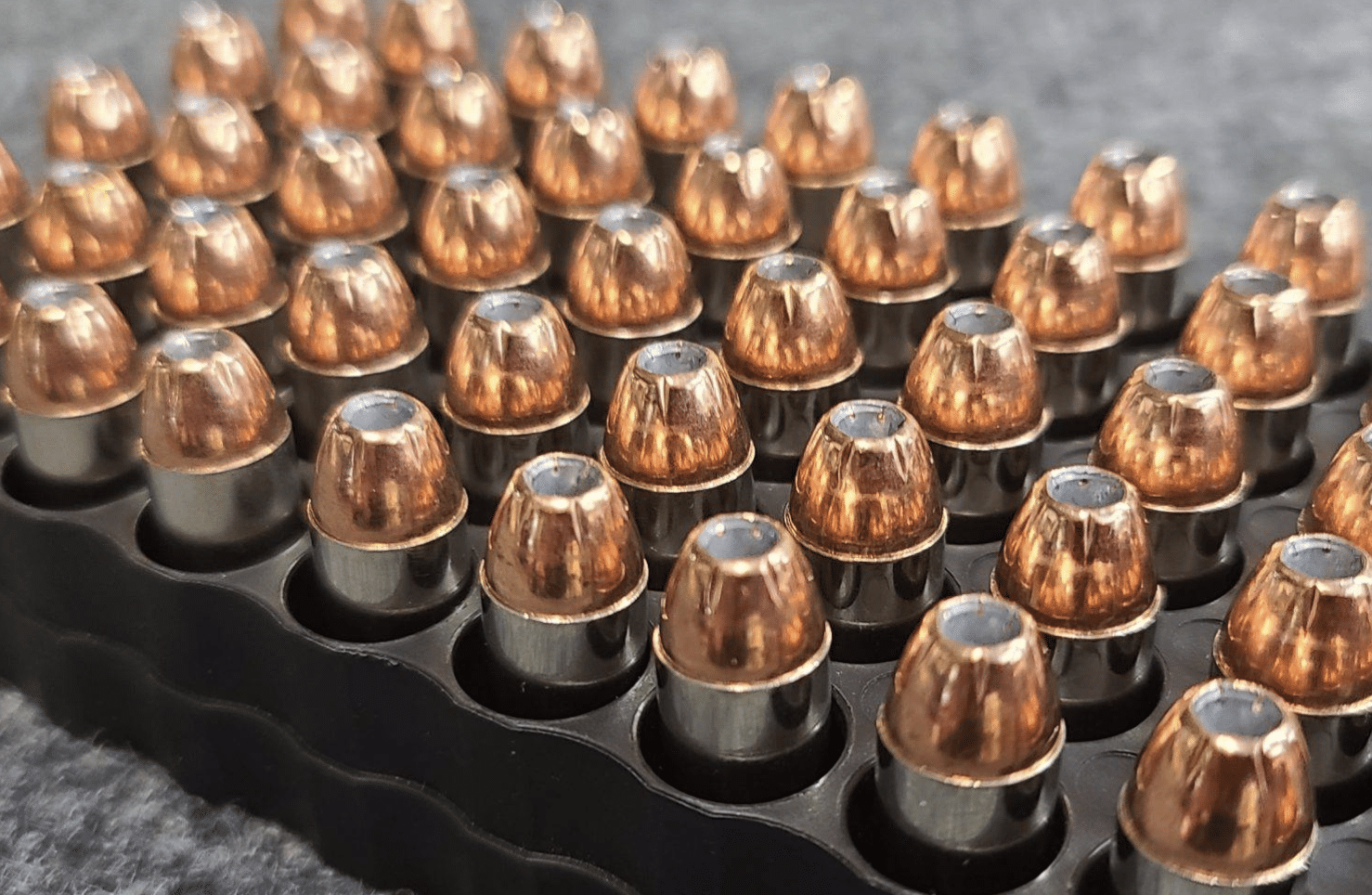
Whether you’re heading to the range, replenishing your ammunition supply, or looking for a particular .40 S&W load, Ammo by Pistol Pete makes it easy to shop for ammunition that fits your needs.
Explore available .40 cal ammo from Ammo by Pistol Pete and compare bullet weights, manufacturers, quantities, and ammunition types before your next range session.
From .40 S&W to other popular handgun and rifle calibers, Ammo by Pistol Pete gives shooters another place to find ammunition for their firearms.
Frequently Asked Questions About .40 Cal Ammo
What caliber is .40 S&W?
.40 S&W uses a projectile approximately .40 inches in diameter. It is a distinct cartridge and should only be used in firearms designed for compatible ammunition.
What are common .40 S&W bullet weights?
165-grain and 180-grain loads are two common options, although additional bullet weights are available.
What is the difference between 165-grain and 180-grain .40 S&W?
165-grain ammunition uses a lighter projectile than 180-grain ammunition. Depending on the specific loads being compared, differences can include velocity, recoil characteristics, and other performance factors.
Is .40 cal good for range shooting?
.40 S&W remains a popular recreational shooting cartridge. FMJ .40 S&W ammunition is widely used for target shooting, practice, and training.
Is .40 cal the same as 10mm?
No. .40 S&W and 10mm Auto are different cartridges with different specifications. Never assume ammunition is interchangeable based on bullet diameter alone.
Can you still buy .40 S&W ammo?
Yes. .40 S&W remains a commercially available handgun cartridge offered by numerous ammunition manufacturers and retailers.
Be sure to check out Ammo By Pistol Pete on Instagram!